Pressure is a tool, not a finish standard
Pressure washing uses mechanical force to move soil. That can suit selected concrete, compatible masonry, service yards, and other durable surfaces when pressure, nozzle, distance, water volume, and operator control match the material. Applied without a review, force can erode mortar, lift paint, mark concrete, drive water behind failed sealants, damage coatings, or push moisture into vulnerable assemblies. Ask what surface is being cleaned, what pressure range is proposed, how joints and openings will be protected, and what result will be accepted at closeout.
Soft washing uses compatible chemistry, dwell time, and a controlled lower-pressure rinse to reduce reliance on force for organic growth and light atmospheric film. Lower pressure does not automatically mean lower risk: products still need selection, containment, protection, rinsing, and responsible water management. If the real issue is mineral scale, oxidation, oil, graffiti, construction residue, paint, or damaged coating, a routine soft wash may not produce the requested finish. The method should follow the condition rather than the label.
Match the method to Kansas City materials
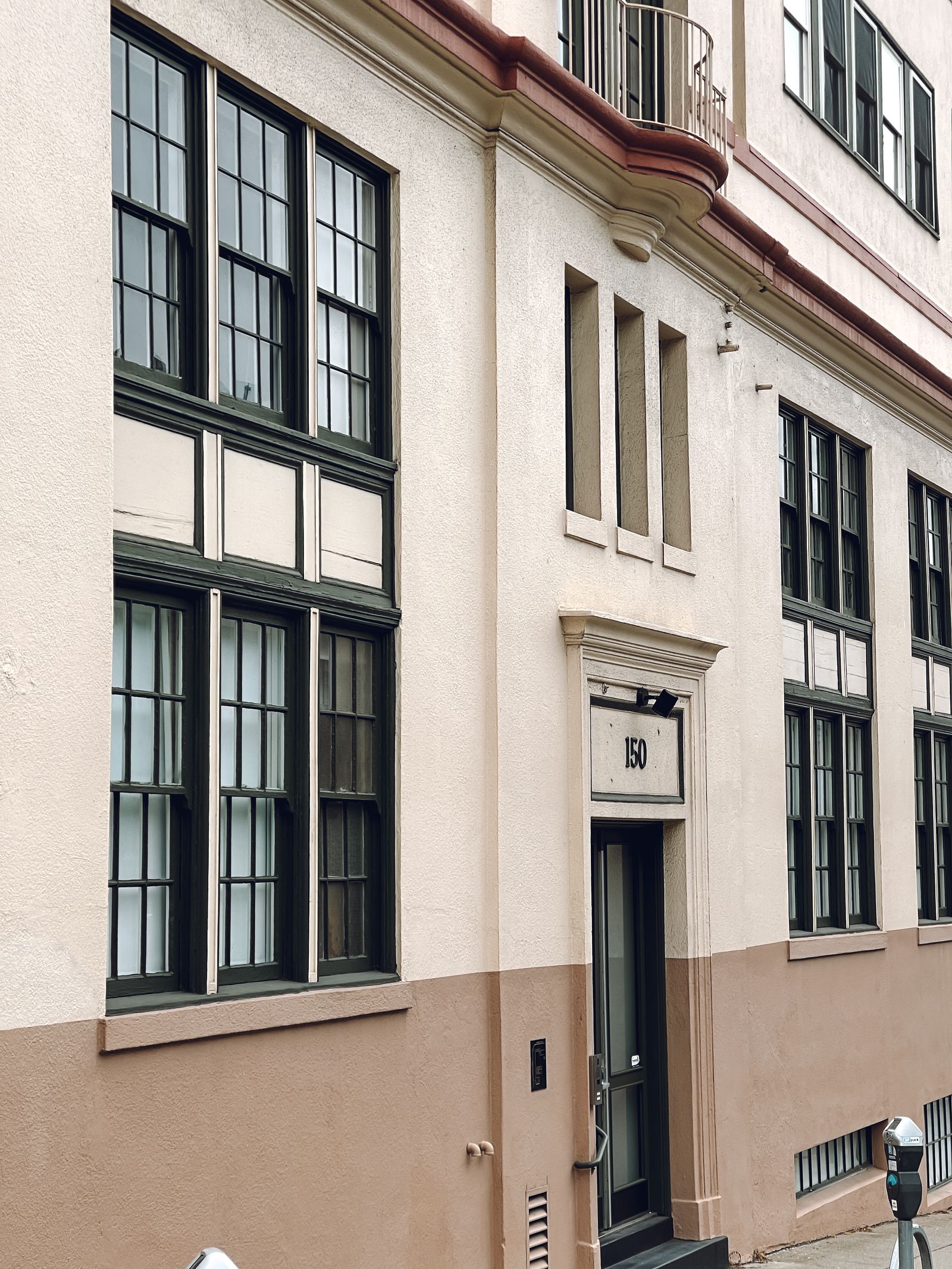
Brick and older masonry require attention to mortar condition, porosity, efflorescence, soot, traffic film, salt, and historic repairs. Limestone can show runoff, biological film, and mineral change while remaining sensitive to an aggressive process. Precast and concrete may have algae, tire residue, and surface marks. Metal panels can have delicate finishes, oxidation, exposed fasteners, and streaking. EIFS and stucco can hold moisture at cracks, trim, joints, and penetrations. Glass needs its own finish expectation: a rinse may remove loose dust, but a clear, touch-finished window may need a water-fed pole or squeegee detail.
A Crossroads facade, Plaza storefront, downtown hotel, and suburban office campus may all have multiple materials on one elevation. A responsible proposal breaks the building into zones and records what will be soft washed, pressure rinsed, hand detailed, protected, tested, deferred, or referred. It also states whether the desired result is a visibly improved wall, a stain reduction, a maintenance clean, or a presentation-grade finish. That language prevents a low bid from appearing comparable when it excludes the most visible material or stain.
- Identify the substrate before selecting pressure, chemistry, nozzle, or dwell time.
- Treat glass, signs, canopies, joints, vents, and roofline details as separate finish zones.
- Test older masonry, coatings, and repaired areas when the response is uncertain.
- Separate washing from repairs, restoration, sealant work, paint, and envelope investigation.
Kansas City weather changes the method and the schedule
Spring pollen, summer heat, humidity, wind, heavy thunderstorms, and winter freeze-thaw all affect results and risk. Heat can shorten dwell time and create uneven drying. Wind can change spray behavior and drift. Rain can dilute products and move soil or water beyond the intended zone. Freeze conditions can turn a rinse into a slip hazard at a ramp, sidewalk, parking deck, or loading dock. Shaded walls beneath trees or beside tall buildings may stay damp longer than sunlit elevations, encouraging different resoiling patterns.
Kansas City's lower walls may also show deicing residue, traffic film, river humidity, and splash near garage approaches or industrial yards. Salt, minerals, oxidation, soot, and biological growth do not respond identically. A contractor should explain whether the proposed method is intended to improve loose residue, organic film, bonded deposits, or appearance only. If conditions change, the crew should secure the area and pause rather than forcing a process through lightning, gusts, unsafe temperatures, or unexpected runoff. A good estimate includes weather limits and a rescheduling path.
Method selection must fit hotels, offices, and industrial sites
A pressure washer can create noise, spray, hose crossings, fast runoff, and a larger public-control footprint. A soft-wash process can require dwell time, careful protection, and a controlled rinse. A downtown hotel may need the porte cochere, bell path, and guest entrance available. A Plaza restaurant may need patio seating, shoppers, signage, and deliveries protected. An office or medical property may need tenant notices, quiet hours, accessible-route controls, and a handback deadline. Industrial buildings near the Missouri River, Fairfax, or rail corridors may have forklifts, trucks, gates, receiving, and sensitive equipment close to the wall.
Ask the contractor to explain how the method changes noise, setup, duration, access, water movement, and the ability to keep the property operating. A hybrid plan may be better than choosing one method for every zone. Soft washing might address organic film on an upper brick wall, a controlled rinse might suit compatible concrete, and contact tools may be needed at glass frames, signs, or mineral deposits. The right method is the one the site team can safely execute and verify, not the one with the most dramatic equipment description.
Treat drone assistance as an access question
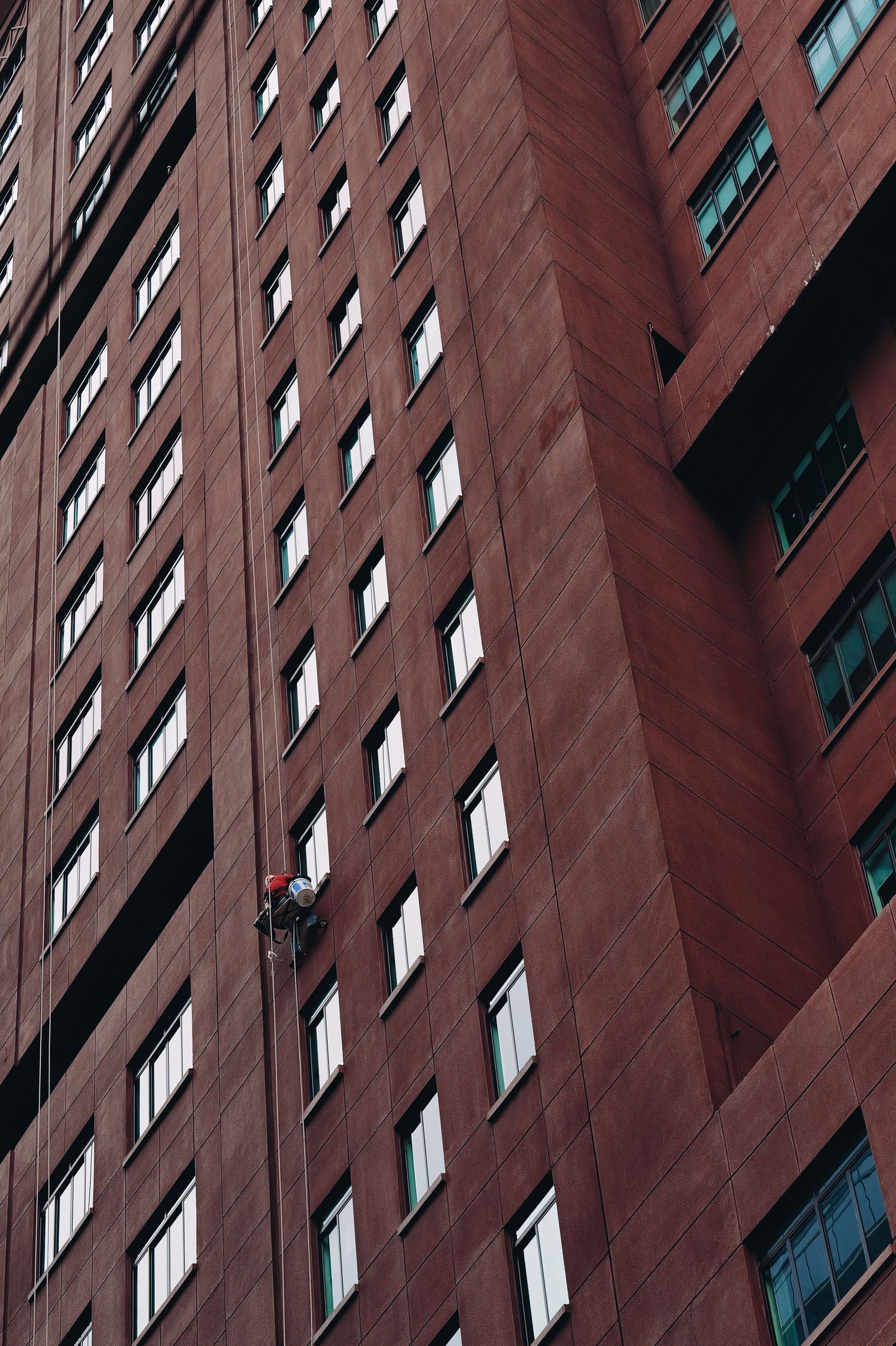
A drone may support application or rinsing on selected upper elevations, but it does not decide whether soft washing or pressure washing is suitable. The surface still controls the method, and the address still controls whether the aircraft can be used. Review wind, utility lines, trees, balconies, adjacent buildings, bridges, launch space, line of sight, people below, airspace, and water containment. Dense Downtown and event areas may favor a ground-based or hybrid method even when the building is tall.
Commercial operations must follow applicable FAA requirements and any required authorizations. A property manager's permission does not replace those rules. Drone assistance cannot provide every squeegee finish, scraping function, repair assessment, or concealed-condition inspection. The quote should identify the areas where it may reduce lift repositioning and the areas requiring a pole, lift, hand detail, roof access, or a specialist. That makes the proposal useful to an owner comparing disruption, finish, and risk.
Drainage and public access belong in the comparison
The cheapest method on paper may create the largest site-control problem if it sends water toward a busy sidewalk, parking structure, landscaping, loading area, storm inlet, or neighboring parcel. Before work, map low points, catch basins, hose crossings, doors, intakes, vehicles, accessible routes, slopes, patios, and river-adjacent drainage. Kansas City properties can route water toward municipal storm systems, landscaped beds, garages, or river corridors. A visible inlet is not automatic permission to discharge wash water into it; the actual water, soil, products, and route determine requirements and controls.
Ask each bidder to state its water-management approach, protection or diversion, collection or recovery assumptions, responsible site contact, and stop condition if observed flow differs from the plan. Ask how guests, tenants, vehicles, employees, and the public will be separated from the work. The closeout should include usable walking routes, removed temporary controls, photographs, and a record of completed, deferred, stained, or damaged areas. These details are part of the cleaning method because they determine whether the project can finish without disrupting the property or leaving an unplanned water problem.
How to compare Kansas City commercial cleaning proposals
Request a proposal that lists facade zones, materials, visible conditions, proposed method, test area, pressure or chemistry assumptions, water source, drainage controls, access equipment, operating window, weather limits, exclusions, and closeout documentation. Ask what happens to salt, oxidation, hard-water marks, construction residue, paint, graffiti, failed sealants, and damaged masonry. Those conditions may require a separate scope. A price is not comparable if one proposal includes only a broad rinse while another includes detail work, containment, multiple access methods, and documented handback.
Provide wide and close photographs, approximate heights, known materials, the address, priority elevations, preferred dates, water access, drainage observations, guest or tenant restrictions, delivery schedules, patio or event constraints, and repair notes. Ask for the recommended sequence and what would cause the crew to postpone or change method. A quote built around the actual building gives ownership and facilities teams a clearer choice: a one-time presentation reset, phased priority cleaning, recurring maintenance, or a referral for restoration or repair. Send the address and the elevations you want improved, and we will recommend the approach that fits the property.